Chemical raw materials are part of the professional cleaning chemistry. This category helps keep sanitary rooms, service areas and commercial facilities clean, organized and comfortable for users. Products should be selected according to the place of use, traffic intensity and hygiene requirements.
Products filter
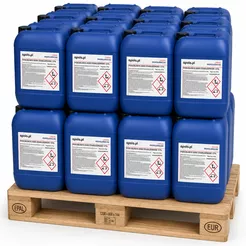
Stabilizowany podchloryn sodu Nazwa chemiczna: chloran(I) sodu Inne nazwy: sól sodowa kwasu podchlorawego, roztwór podchlorynu sodu, Sodium hypochlorite (ang.) Wzór chemiczny: NaOCl, Nr CAS: 7681-52-9, Nr indeksowy: 017-011-00-1, Nr WE (EINECS): 231-668-3 Wygląd / stan: ciecz, klarowna Barwa: przezroczysta, lekko żółta Zapach: charakterystyczny, drażniący Zawartość aktywnego chloru: ≥ 150 g/l (typowo 150–190 g/l) Gęstość (20 °C): 1,20–1,32 kg/l pH (20 °C): ≥ 11,0 Zawartość NaOH: ≤ 2% (m/m) Zawartość Na2CO3: ≤ 2% (m/m) Waga netto: 300 kg (12 × kanister 25 kg) Trwałość produktu: 3 miesiące od daty produkcji Nazwa produktu biobójczego: PODCHLORYN SODU S JARBUR Numer pozwolenia na obrót produktem biobójczym: 10098/25 Substancja czynna: aktywny chlor uwalniany przez podchloryn sodu 14,5 g/100 g Płynny koncentrat biobójczy, przeznaczony do dezynfekcji powierzchni mających i niemających kontaktu z żywnością (bakterie, grzyby, wirusy), powierzchni związanych z pobytem lub transportem zwierząt w celu utrzymania higieny weterynaryjnej (bakterie, grzyby), układów zamkniętych (CIP) (bakterie, grzyby, wirusy), wody basenowej i pitnej (bakterie, wirusy). Produkt ogranicza rozwój bakterii i grzybów tworzących śluz w przemyśle celulozowym. Jest również stosowany do konserwacji wody w systemach chłodniczych, zwalczając bakterie (w tym Legionella pneumophila) oraz grzyby. Zastosowanie Powierzchnie kontaktujące i niekontaktujące się z żywnością: Powierzchnie umyć, nanieść roztwór o stężeniu 0,2%, pozostawiając na 15 minut (bakterie i grzyby). Skuteczność wirusobójcza jest osiągana po 5 minutach dla stężenia 0,3%. Powierzchnie mające kontakt z żywnością spłukać wodą pitną. Dezynfekcja instalacji i obiegów zamkniętych (CIP): Instalacje umyć przed dezynfekcją. Do dezynfekcji stosuje się roztwory: od 0,1% (bakteriobójczość, wirusobójczość) do 0,3% (grzybobójczość) w czasie minimum 5 min. Po użyciu produktu powierzchnie kontaktujące się z żywnością należy spłukać wodą przeznaczoną do spożycia. Powierzchnie związane z pobytem lub transportem zwierząt: Po umyciu, nanieść roztwór o stężeniu 0,2% i pozostawić zwilżone na 30 minut (badano w temp. 10 st. C). Powierzchnie kontaktujące się z żywnością i paszami zwierzęcymi należy spłukać wodą pitną. Zwierzęta mogą korzystać z obszaru zaraz po dezynfekcji. Woda pitna: Produkt wykazuje skuteczność bakteriobójczą zgodnie z normą EN1276 (warunki czyste dla wody pitnej; stężenie 0,04%, czas kontaktu 30 minut, 15 st. C) oraz skuteczność wirusobójczą zgodnie z normą EN14476 ( 0,03%, 30 minut, 15 st. C, warunki czyste dla wody pitnej). Dawkowanie powinno być dostosowane do specyfiki dezynfekowanej wody, zgodnie z wynikami badań chemicznych i mikrobiologicznych. Woda po dezynfekcji musi spełniać wymagania zgodne z Rozporządzeniem Ministra Zdrowia w sprawie wymagań dla wody przeznaczonej do spożycia. Baseny: Produkt wykazał skuteczność bakteriobójczą zgodnie z normą EN1276 (warunki dla wody basenowej, stężenie 0,03%, czas kontaktu 180 minut, 20 st. C) oraz skuteczność wirusobójczą zgodnie z normą EN14476 (warunki dla wody basenowej, 0,02%, 30 minut, 25 st. C). Dawkowanie powinno być dostosowane do charakterystyki basenu, zgodnie z wynikami badań chemicznych i mikrobiologicznych. W przypadku układów automatycznych korzystanie z basenu jest dozwolone w trakcie dozowania, produkt jest przeznaczony do dozowania ciągłego. W przypadku dozowania ręcznego nie należy dozować produktu w obecności kąpiących, kąpiący mogą korzystać z basenu po równomiernym wymieszaniu produktu w wodzie, ale nie wcześniej niż 30 minut po dozowaniu. Woda po dezynfekcji powinna spełniać wymagania zgodne z Rozporządzeniem Ministra Zdrowia w sprawie wymagań, jakim powinna odpowiadać woda na pływalniach. Konserwacja wody chłodniczej: Wprowadzić 0,01% produktu do wody w układzie chłodniczym. Produkt działa skutecznie po 3 godzinach, zgodnie z normą ASTM E645-18 przy 10°C. Zwalczanie śluzu w przemyśle celulozowym: Wprowadzić 0,01% produktu do wody zagrożonej śluzem, skuteczność jest osiągana po 3 godzinach wobec bakterii i po 24 godzinach wobec grzybów, zgodnie z normą ASTM E1839-20 przy temperaturze 32°C dla bakterii i 25°C dla grzybów.
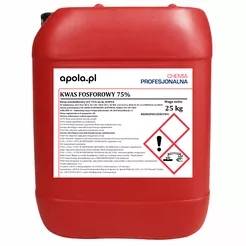
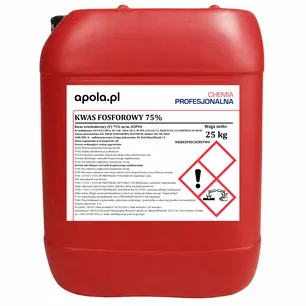
Kwas fosforowy 75% kanister 25 kg Wzór chemiczny: H3PO4 Nazwa chemiczna: kwas ortofosforowy(V), roztwór wodny 75% Nr CAS / WE / indeksowy: 7664-38-2 / 231-633-2 / 015-011-00-6 Nr rejestracji REACH: 01-2119485924-24-0030 Stężenie: 75% (m/m) Postać / barwa / zapach: ciecz bezbarwna do zielonkawej, zasadniczo bezwonna pH: < 1 Gęstość względna dla 75% H3PO4: ok. 1,5788 g/cm³ w 15°C Temperatura wrzenia dla 75% H3PO4: ok. 135°C Temperatura krzepnięcia dla 75% H3PO4: ok. −17,5°C Rozpuszczalność: miesza się z wodą bez ograniczeń Właściwości: kwas nieorganiczny, żrący, regulator pH, środek odtłuszczający i pomocniczy w procesach technologicznych Opakowanie: kanister 30 kg z tworzywa odpornego na działanie kwasów Transport ADR: UN 1805, KWAS FOSFOROWY, ROZTWÓR, klasa 8, grupa pakowania III Charakterystyka i atuty technologiczne Kwas fosforowy 75% to stężony roztwór kwasu ortofosforowego(V), przeznaczony do zastosowań profesjonalnych i przemysłowych. Produkt jest cieczą o silnie kwaśnym odczynie, całkowicie mieszalną z wodą, stosowaną przede wszystkim jako regulator pH, surowiec chemiczny, składnik preparatów technologicznych oraz środek pomocniczy w obróbce powierzchni i procesach czyszczenia. W porównaniu z wieloma silnymi kwasami mineralnymi kwas fosforowy cechuje się dobrą przewidywalnością pracy w roztworach wodnych i szeroką użytecznością procesową. Wymaga jednak rygorystycznego przestrzegania zasad BHP: jest produktem żrącym, może powodować poważne oparzenia skóry i uszkodzenia oczu, a także korozję metali. Parametry jakościowe produktu mogą być potwierdzane świadectwem kontroli jakości. Typowa kontrola obejmuje m.in. zawartość H3PO4 oraz wybrane zanieczyszczenia, takie jak arsen, rtęć, ołów, kadm, fluorki, chlorki, siarczany, azotany i lotne kwasy. Zastosowania — przegląd branżowy Przemysł chemiczny i produkcja mieszanin Surowiec i półprodukt technologiczny: stosowany w syntezie produktów chemicznych oraz jako składnik mieszanin przemysłowych. Regulacja pH: wykorzystywany do zakwaszania i stabilizacji środowiska procesowego w instalacjach technologicznych. Chemikalia laboratoryjne i pomocnicze: używany w laboratoriach oraz w procesach, w których wymagany jest kontrolowany dodatek kwasu nieorganicznego. Obróbka metali i przygotowanie powierzchni Powierzchniowa obróbka metali: kwas fosforowy jest stosowany w procesach przygotowania, czyszczenia i kondycjonowania powierzchni metalowych. Usuwanie osadów mineralnych i produktów korozji: może być składnikiem preparatów do czyszczenia powierzchni, przy zachowaniu zgodności materiałowej i procedur zakładowych. Inhibicja korozji / procesy pomocnicze: stosowany w wybranych aplikacjach jako składnik układów technologicznych związanych z ochroną lub przygotowaniem powierzchni. Profesjonalne czyszczenie, detergenty i utrzymanie instalacji Składnik środków czyszczących: wykorzystywany w formulacjach do usuwania osadów nieorganicznych, kamienia i nalotów mineralnych. Odtłuszczanie i czyszczenie technologiczne: stosowany jako środek pomocniczy w procesach mycia, odkamieniania i przygotowania powierzchni. Utrzymanie urządzeń przemysłowych: może być używany w procedurach zakładowych, w których wymagana jest kontrolowana praca roztworem kwaśnym. Nawozy, pasze i zastosowania specjalistyczne Branża nawozowa: kwas fosforowy jest wykorzystywany jako źródło fosforu i surowiec w produkcji nawozów. Przemysł paszowy: w odpowiedniej jakości może być stosowany jako dodatek paszowy 1a338. Zastosowania spożywcze / E338: kwas fosforowy spełniający wymagania jakościowe dla dodatku E338 może być wykorzystywany jako regulator kwasowości i substancja technologiczna. O dopuszczeniu do takich zastosowań decyduje dokumentacja jakościowa konkretnej partii oraz zgodność z właściwymi wymaganiami branżowymi. Budownictwo i zastosowania techniczne Procesy budowlane i techniczne: stosowany w wybranych aplikacjach wymagających działania kwaśnego, np. przy czyszczeniu powierzchni mineralnych lub przygotowaniu podłoża. Preparaty pomocnicze: może być składnikiem mieszanin roboczych używanych przez przeszkolony personel zgodnie z procedurami zakładowymi. Produkt dostępny wyłącznie dla firm.Sprzedaż prowadzona dla użytkowników profesjonalnych i podmiotów gospodarczych.Produkt nie jest przeznaczony do zastosowań detalicznych/domowych. Kwas fosforowy 75% to produkt profesjonalny. Nie należy stosować go bez odpowiedniego przeszkolenia, środków ochrony indywidualnej oraz znajomości karty charakterystyki. Produkt jest żrący i może powodować poważne oparzenia skóry oraz uszkodzenia oczu. Sposób użycia i rozcieńczanie Produkt stosować wyłącznie zgodnie z procedurami zakładowymi, instrukcją technologiczną i kartą charakterystyki. Przy rozcieńczaniu pracować w dobrze wentylowanym miejscu, w okularach lub goglach ochronnych, rękawicach odpornych chemicznie i odzieży ochronnej. Roztwory przygotowywać ostrożnie, dodając kwas do wody małymi porcjami i mieszając. Nie dodawać wody do stężonego kwasu. Przykładowe rozcieńczenia masowe z produktu 75%: Roztwór ok. 10% H3PO4: 1 część produktu + ok. 6,5 części wody. Roztwór ok. 5% H3PO4: 1 część produktu + ok. 14 części wody. Roztwór ok. 1% H3PO4: 1 część produktu + ok. 74 części wody. Podane proporcje mają charakter orientacyjny. Dobór stężenia, temperatury, czasu kontaktu i sposobu neutralizacji musi wynikać z procedury technologicznej, wymagań materiałowych oraz oceny ryzyka dla danego procesu. Bezpieczeństwo pracy i magazynowanie Wymagane są środki ochrony indywidualnej: rękawice odporne chemicznie, odzież ochronna, ochrona oczu i twarzy. Unikać kontaktu ze skórą i oczami oraz wdychania mgły/par/rozpylonej cieczy. W miejscu pracy powinna być dostępna możliwość płukania oczu i prysznic bezpieczeństwa. Przechowywać w szczelnie zamkniętym opakowaniu odpornym na korozję, w miejscu wentylowanym i zabezpieczonym przed przypadkowym wyciekiem. Nie dopuszczać do kontaktu z metalami, zasadami, tlenkami metali i nitrometanem. Nie wprowadzać produktu do kanalizacji, gruntu ani cieków wodnych. Opis ma charakter informacyjny i nie zastępuje karty charakterystyki produktu.
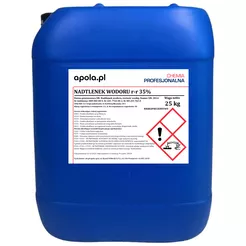
Product available exclusively for companies.Order fulfillment possible after submission of the buyer's declaration.Sales are not conducted for private individuals / consumers. Hydrogen peroxide aqueous solution 35% (perhydrol) Chemical formula: H2O2 CAS / EC / index number: 7722-84-1 / 231-765-0 / 008-003-00-9 Concentration: 35% (m/m), aqueous solution Form / color / odor: colorless liquid, characteristic odor Density (20 °C): approx. 1.13 g/cm³ pH (20 °C): 2–3 Molar mass (H2O2): 34.01 g/mol Solubility: completely miscible with water Freezing point (35%): approx. −33 °C Boiling point (35%): ~108 °C (with decomposition) Properties: strong oxidizer, corrosive; the solution may undergo slow decomposition (release of oxygen) Packaging: HDPE canister with UN certification, DIN 61 cap, with seal and vent Legal notes (EU): listed in Regulation (EU) 2019/1148 as a precursor to explosives – restrictions on trade for private users Characteristics and technological advantages Perhydrol (H2O2 35%) is a strong, oxygen-based oxidizer with a wide range of applications. Its action results from the controlled decomposition into water and oxygen, which means it does not leave foreign compounds in the process environment. The product is chlorine-free, does not introduce halides, and typically does not generate persistent by-products. In industrial practice, a 35% solution serves as a concentrated raw material, which — according to the safety data sheet and manufacturer’s instructions — is diluted to working levels appropriate for a given application. Below is an outline of the most common areas of use. Applications (industry overview) Food and beverage industry Disinfection of packaging and aseptic lines: Hygiene of surfaces in contact with food (PET/HDPE, multilayer cartons, caps). After contact time and possible neutralization, residues decompose into H₂O and O₂. CIP cleaning / biocidal rinsing of installations: Limiting biofilm and opportunistic microflora in dairies, breweries, juice factories. Deodorization / oxidation of difficult organic deposits: In raw material preparation areas, waste logistics, and inter-process wastewater. Water and wastewater treatment Odor removal: Oxidation of sulfides, mercaptans, and other odoriferous compounds in process waters and municipal/industrial wastewater. Microbiological control of process water: Supporting disinfection – often in systems with UV or ozone to reduce doses of reagents and by-products. Advanced oxidation processes (AOP): H₂O₂ + UV/ozone/catalyst for the degradation of micro-pollutants and hard-to-biodegrade compounds (e.g., phenols, aldehydes, traces of aromatic amines). Healthcare and professional hygiene VHP (vaporized hydrogen peroxide): 35% H₂O₂ as a precursor for generating vaporized hydrogen peroxide for decontaminating cleanrooms, isolators, biosafety cabinets, and temperature-sensitive equipment. Disinfection of surfaces and equipment: After preparing working solutions – wide spectrum of action (bacteria, viruses, spores). An alternative to chlorine-based agents, limiting the formation of chlorinated by-products. Pulp and paper industry Bleaching of pulp and paper: Oxidizing bleaching without chlorine, reducing AOX load in wastewater. Decolorization and bleaching of fibers: Cotton, viscose – a preliminary stage before dyeing/finishing; control over fiber strength loss by optimizing pH, temperature, and stabilization. Maintenance and technical cleaning Removal of deposits and organic discolorations: Protein-fat stains, soot, secondary discolorations from vegetable oils on compatible substrates. Reduction of biofilm: An element of sanitation programs in processing and water installations (tanks, lines, coolers). Electronics and precision processes Micro-etching / surface preparation: Component of baths for processing copper and alloys (PCB/EMS), usually in systems with mineral acids. High purity cleaning: Component of formulations for decontaminating optical and metal parts – necessary compatibility tests (aluminum, copper, brass, sinters). Laboratories, synthesis, and process chemistry Auxiliary oxidizer: Reagent for selective oxidations, generating oxygen, supporting termination and cleaning reactions. Neutralization of post-reaction contaminants: Oxidation of traces of sulfites, aldehydes, phenols, aromatic amines before directing the stream to purification. Agriculture and aquaculture (professional applications) Hygienization of irrigation systems: Limiting biofilm and microbiological blockages in drip lines; protecting emitters and uniformity of distribution. Disinfection of work surfaces and containers: Packing, sorting, greenhouse farms – as part of GHP/GMP. Environmental protection and health and safety Odor detoxification and emergency neutralizations: Rapid reduction of odors at landfills, in pumping stations, and sedimentation tanks; supporting the decomposition of sulfur and nitrogen compounds with unpleasant odors. No consumer applications Perhydrol 35% is a professional product. It is not intended for retail/home applications or for the independent preparation of consumer products. A concentration of 35% is a popular storage standard: it provides high stability and predictability of parameters, while being logistically convenient. It is easy to prepare working solutions with required concentrations for various technological lines. Work safety: 35% H2O2 is corrosive and a strong oxidizer — personal protective equipment (gloves, eye/face protection, clothing), compatible materials (HDPE, PTFE, acid-resistant steel under certain conditions), and ventilation are required. Avoid contact with catalytic metals, alkaline and organic reducing agents. How to use (example working dilutions) Prepare working solutions by slowly adding perhydrol to water (never the other way around), in a cool and well-ventilated place. Examples of calculations: 1% H2O2 from 35%: 1 part perhydrol + 34 parts water (1:34). 2%: 1 part + 16.5 parts water (≈1:16.5). 3%: 1 part + 10.7 parts water (≈1:10.7). The choice of concentration, temperature, and contact time depends on the process/installation and should result from company procedures, industry standards, or equipment manufacturer documentation. After sanitizing surfaces that come into contact with food – always rinse with potable water.
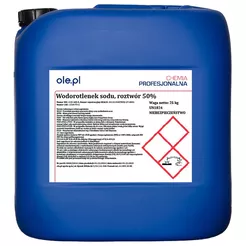
SODIUM HYDROXIDE 50% (caustic soda, lye) Synonyms: caustic soda, lye, sodium hydroxide solution, sodium hydroxide solution 50%, caustic soda lye CAS / EC No: 1310-73-2 / 215-185-5 Chemical formula (active substance): NaOH Molar mass (NaOH): 40.00 g/mol Working concentration: 50% (w/w) Form / appearance: colorless to slightly opalescent liquid, odorless Chemical reaction: strongly alkaline, reacts vigorously with acids (neutralization reactions), reacts with some metals (e.g. Al, Zn) releasing hydrogen pH: 13–14 (20 °C) Density: ≈ 1.53 kg/l (20 °C) Freezing point: ≈ 12 °C (possible crystallization in cold) Solubility: very good in water (miscible in any ratio); dilution is highly exothermic Ionic conductivity: high (electrolytic solution) Material compatibility: recommended: carbon steel, stainless steel, PE, PP, PVC, PTFE; avoid: aluminum, zinc, light alloys, glass at elevated temperatures. Storage conditions: airtight, covered, ventilated; protect from frost and sunlight; maintain temperature > 15 °C for 50% to prevent crystallization What is it and how does it work? Sodium hydroxide in solution (caustic soda, lye) is a key, highly alkaline inorganic reagent used for pH regulation, acid neutralization, and conducting saponification, hydrolysis, and alkalization reactions in numerous industrial processes. The 50% solution combines a high active substance content with good stability, facilitating automatic dosing in installations. Due to the highly exothermic nature of dilution, preparation of solutions always requires adding lye to water, never the other way around, and using appropriate heat exchangers and process safeguards. Main industrial applications 1. Chemical industry: Production of cleaning agents: Lye is a key ingredient in the production of various detergents and cleaning agents. It reacts with fats and oils to form soaps (saponification process). Chemical synthesis: Used as a reagent in many chemical reactions where an alkaline environment is required. 2. Pulp and paper industry: Lignin breakdown: Caustic soda is used to remove lignin from cellulose in wood, which is crucial in the production of white paper. This allows for the production of pure cellulose, necessary for high-quality paper production. 3. Food processing: Cleaning and disinfection: Lye is used for washing and disinfecting equipment and surfaces that come into contact with food, especially in the dairy and meat industries. Acidity regulation: Used to adjust pH in food products, affecting taste, texture, and preservation of products. 4. Water treatment: Neutralization of acids: Caustic soda is used to neutralize acidic contaminants in industrial processes and wastewater treatment plants. pH regulation: Helps maintain appropriate pH levels in industrial and municipal water systems. 5. Petroleum industry: Neutralization of acids: Used to neutralize acidic contaminants in oil processing. Drilling fluids: Component of drilling fluids used to stabilize well walls and prevent corrosion. 6. Aluminum production: Bayer process: Caustic soda is a key component in the process of extracting aluminum from bauxite, where it is used to dissolve aluminum oxide, allowing for its subsequent extraction. 7. Textile industry: Mercerization: Lye is used to treat cotton, increasing its luster, strength, and ability to absorb dyes. Precautions: When handling sodium hydroxide, it is essential to use appropriate protective equipment, including safety goggles, chemical-resistant gloves, and protective clothing. The product should be stored in tightly closed containers away from acidic materials and in a cool, dry place to avoid moisture and CO₂ absorption from the air. Hazardous products should be used with caution. Read the label and product information before each use.
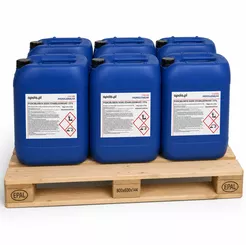
Stabilized sodium hypochlorite Chemical name: sodium hypochlorite Other names: sodium salt of hypochlorous acid, sodium hypochlorite solution, Sodium hypochlorite (eng.) Chemical formula: NaOCl, CAS No: 7681-52-9, Index number: 017-011-00-1, EC No (EINECS): 231-668-3 Appearance / state: liquid, clear Color: transparent, slightly yellow Odor: characteristic, irritating Active chlorine content: ≥ 150 g/l (typically 150–190 g/l) Density (20 °C): 1.20–1.32 kg/l pH (20 °C): ≥ 11.0 NaOH content: ≤ 2% (m/m) Na2CO3 content: ≤ 2% (m/m) Net weight: 150 kg (6 × 25 kg canister) Product shelf life: 3 months from the date of production Biocidal product name: SODIUM HYPOCHLORITE S JARBUR Biocidal product authorization number: 10098/25 Active substance: active chlorine released by sodium hypochlorite 14.5 g/100 g Liquid biocidal concentrate intended for disinfecting surfaces that may or may not come into contact with food (bacteria, fungi, viruses), surfaces related to the stay or transport of animals to maintain veterinary hygiene (bacteria, fungi), closed systems (CIP) (bacteria, fungi, viruses), swimming pool and drinking water (bacteria, viruses). The product limits the growth of bacteria and fungi that form slime in the pulp industry. It is also used for water conservation in cooling systems, combating bacteria (including Legionella pneumophila) and fungi. Application Food contact and non-contact surfaces: Clean surfaces, apply a solution with a concentration of 0.2%, leaving it for 15 minutes (bacteria and fungi). Virucidal effectiveness is achieved after 5 minutes for a concentration of 0.3%. Surfaces that come into contact with food should be rinsed with drinking water. Disinfection of installations and closed circuits (CIP): Clean installations before disinfection. For disinfection, solutions are used: from 0.1% (bactericidal, virucidal) to 0.3% (fungicidal) for a minimum time of 5 min. After using the product, surfaces that come into contact with food should be rinsed with potable water. Surfaces related to the stay or transport of animals: After cleaning, apply a solution with a concentration of 0.2% and leave wet for 30 minutes (tested at 10 °C). Surfaces that come into contact with food and animal feed should be rinsed with drinking water. Animals can use the area immediately after disinfection. Drinking water: The product demonstrates bactericidal effectiveness according to EN1276 (clean conditions for drinking water; concentration 0.04%, contact time 30 minutes, 15 °C) and virucidal effectiveness according to EN14476 (0.03%, 30 minutes, 15 °C, clean conditions for drinking water). Dosage should be adjusted to the specifics of the disinfected water, according to the results of chemical and microbiological tests. Water after disinfection must meet the requirements in accordance with the Regulation of the Minister of Health regarding the requirements for water intended for consumption. Swimming pools: The product has demonstrated bactericidal effectiveness according to EN1276 (conditions for swimming pool water, concentration 0.03%, contact time 180 minutes, 20 °C) and virucidal effectiveness according to EN14476 (conditions for swimming pool water, 0.02%, 30 minutes, 25 °C). Dosage should be adjusted to the characteristics of the pool, according to the results of chemical and microbiological tests. In the case of automatic systems, swimming is allowed during dosing; the product is intended for continuous dosing. In the case of manual dosing, do not dose the product in the presence of bathers; bathers may use the pool after the product is evenly mixed in the water, but not earlier than 30 minutes after dosing. Water after disinfection should meet the requirements in accordance with the Regulation of the Minister of Health regarding the requirements that water in swimming pools should meet. Cooling water conservation: Introduce 0.01% of the product into the water in the cooling system. The product acts effectively after 3 hours, according to ASTM E645-18 at 10°C. Slime control in the pulp industry: Introduce 0.01% of the product into water threatened by slime; effectiveness is achieved after 3 hours against bacteria and after 24 hours against fungi, according to ASTM E1839-20 at 32°C for bacteria and 25°C for fungi.
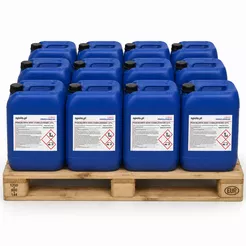
Stabilized sodium hypochlorite Chemical name: sodium hypochlorite Other names: sodium hypochlorite salt, sodium hypochlorite solution, Sodium hypochlorite (eng.) Chemical formula: NaOCl, CAS No: 7681-52-9, Index No: 017-011-00-1, EC No (EINECS): 231-668-3 Appearance / state: liquid, clear Color: transparent, slightly yellow Odor: characteristic, irritating Active chlorine content: ≥ 150 g/l (typically 150–190 g/l) Density (20 °C): 1.20–1.32 kg/l pH (20 °C): ≥ 11.0 NaOH content: ≤ 2% (m/m) Na2CO3 content: ≤ 2% (m/m) Net weight: 300 kg (12 × 25 kg canister) Product shelf life: 3 months from the date of production Biocidal product name: SODIUM HYPOCHLORITE S JARBUR Biocidal product authorization number: 10098/25 Active substance: active chlorine released by sodium hypochlorite 14.5 g/100 g Liquid biocidal concentrate intended for disinfecting surfaces that may or may not come into contact with food (bacteria, fungi, viruses), surfaces related to the stay or transport of animals to maintain veterinary hygiene (bacteria, fungi), closed systems (CIP) (bacteria, fungi, viruses), swimming pool and drinking water (bacteria, viruses). The product limits the growth of bacteria and fungi that form slime in the pulp industry. It is also used for water preservation in cooling systems, combating bacteria (including Legionella pneumophila) and fungi. Application Food contact and non-contact surfaces: Clean surfaces, apply a solution with a concentration of 0.2%, leaving it for 15 minutes (bacteria and fungi). Virucidal effectiveness is achieved after 5 minutes for a concentration of 0.3%. Surfaces that come into contact with food should be rinsed with drinking water. Disinfection of installations and closed circuits (CIP): Clean installations before disinfection. For disinfection, solutions are used: from 0.1% (bactericidal, virucidal) to 0.3% (fungicidal) for a minimum time of 5 min. After using the product, surfaces that come into contact with food should be rinsed with potable water. Surfaces related to the stay or transport of animals: After cleaning, apply a solution with a concentration of 0.2% and leave wet for 30 minutes (tested at 10 °C). Surfaces that come into contact with food and animal feed should be rinsed with drinking water. Animals can use the area immediately after disinfection. Drinking water: The product demonstrates bactericidal effectiveness according to standard EN1276 (clean conditions for drinking water; concentration 0.04%, contact time 30 minutes, 15 °C) and virucidal effectiveness according to standard EN14476 (0.03%, 30 minutes, 15 °C, clean conditions for drinking water). Dosage should be adjusted to the specifics of the disinfected water, according to the results of chemical and microbiological tests. Water after disinfection must meet the requirements in accordance with the Regulation of the Minister of Health regarding the requirements for water intended for consumption. Swimming pools: The product has demonstrated bactericidal effectiveness according to standard EN1276 (conditions for swimming pool water, concentration 0.03%, contact time 180 minutes, 20 °C) and virucidal effectiveness according to standard EN14476 (conditions for swimming pool water, 0.02%, 30 minutes, 25 °C). Dosage should be adjusted to the characteristics of the pool, according to the results of chemical and microbiological tests. In the case of automatic systems, swimming is allowed during dosing; the product is intended for continuous dosing. In the case of manual dosing, do not dose the product in the presence of bathers; bathers may use the pool after the product is evenly mixed in the water, but not earlier than 30 minutes after dosing. Water after disinfection should meet the requirements in accordance with the Regulation of the Minister of Health regarding the requirements that water in swimming pools should meet. Cooling water preservation: Introduce 0.01% of the product into the water in the cooling system. The product acts effectively after 3 hours, according to standard ASTM E645-18 at 10°C. Slime control in the pulp industry: Introduce 0.01% of the product into water threatened by slime; effectiveness is achieved after 3 hours against bacteria and after 24 hours against fungi, according to standard ASTM E1839-20 at a temperature of 32°C for bacteria and 25°C for fungi.
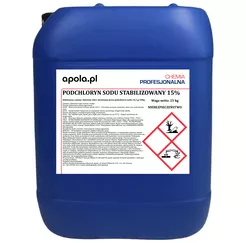
Stabilized sodium hypochlorite Chemical name: sodium chlorate(I) Other names: sodium hypochlorite salt, sodium hypochlorite solution, Sodium hypochlorite (eng.) Chemical formula: NaOCl, CAS No: 7681-52-9, Index No: 017-011-00-1, EC No (EINECS): 231-668-3 Appearance / state: liquid, clear Color: transparent, slightly yellow Odor: characteristic, irritating Active chlorine content: ≥ 150 g/l (typically 150–190 g/l) Density (20 °C): 1.20–1.32 kg/l pH (20 °C): ≥ 11.0 NaOH content: ≤ 2% (m/m) Na2CO3 content: ≤ 2% (m/m) Packaging: HDPE canister with UN certification, DIN 61 cap, with seal and vent Net weight: 25 kg Product shelf life: 3 months from the date of production Biocidal product name: SODIUM HYPOCHLORITE S JARBUR Biocidal product authorization number: 10098/25 Active substance: active chlorine released by sodium hypochlorite 14.5 g/100 g Liquid biocidal concentrate intended for disinfecting surfaces that come into contact and do not come into contact with food (bacteria, fungi, viruses), surfaces related to the stay or transport of animals to maintain veterinary hygiene (bacteria, fungi), closed systems (CIP) (bacteria, fungi, viruses), swimming pool and drinking water (bacteria, viruses). The product limits the growth of bacteria and fungi that form slime in the pulp industry. It is also used for water preservation in cooling systems, combating bacteria (including Legionella pneumophila) and fungi. Application Food contact and non-contact surfaces: Clean surfaces, apply a solution with a concentration of 0.2%, leaving it for 15 minutes (bacteria and fungi). Virucidal effectiveness is achieved after 5 minutes for a concentration of 0.3%. Surfaces that come into contact with food should be rinsed with drinking water. Disinfection of installations and closed circuits (CIP): Clean installations before disinfection. For disinfection, solutions are used: from 0.1% (bactericidal, virucidal) to 0.3% (fungicidal) for a minimum time of 5 min. After using the product, surfaces that come into contact with food should be rinsed with potable water. Surfaces related to the stay or transport of animals: After cleaning, apply a solution with a concentration of 0.2% and leave wet for 30 minutes (tested at 10 °C). Surfaces that come into contact with food and animal feed should be rinsed with drinking water. Animals can use the area immediately after disinfection. Drinking water: The product shows bactericidal effectiveness according to the EN1276 standard (clean conditions for drinking water; concentration 0.04%, contact time 30 minutes, 15 °C) and virucidal effectiveness according to the EN14476 standard (0.03%, 30 minutes, 15 °C, clean conditions for drinking water). Dosage should be adjusted to the specifics of the disinfected water, according to the results of chemical and microbiological tests. Water after disinfection must meet the requirements in accordance with the Regulation of the Minister of Health regarding the requirements for water intended for consumption. Swimming pools: The product has shown bactericidal effectiveness according to the EN1276 standard (conditions for swimming pool water, concentration 0.03%, contact time 180 minutes, 20 °C) and virucidal effectiveness according to the EN14476 standard (conditions for swimming pool water, 0.02%, 30 minutes, 25 °C). Dosage should be adjusted to the characteristics of the pool, according to the results of chemical and microbiological tests. In the case of automatic systems, swimming is allowed during dosing; the product is intended for continuous dosing. In the case of manual dosing, do not dose the product in the presence of bathers; bathers may use the pool after the product is evenly mixed in the water, but not earlier than 30 minutes after dosing. Water after disinfection should meet the requirements in accordance with the Regulation of the Minister of Health regarding the requirements that water in swimming pools should meet. Cooling water preservation: Introduce 0.01% of the product into the water in the cooling system. The product acts effectively after 3 hours, according to the ASTM E645-18 standard at 10°C. Slime control in the pulp industry: Introduce 0.01% of the product into water threatened by slime; effectiveness is achieved after 3 hours against bacteria and after 24 hours against fungi, according to the ASTM E1839-20 standard at a temperature of 32°C for bacteria and 25°C for fungi.
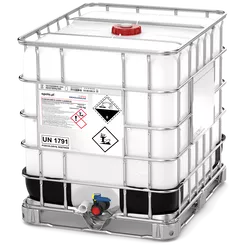
Stabilized sodium hypochlorite Chemical name: sodium chlorate(I) Other names: sodium hypochlorite salt, sodium hypochlorite solution, Sodium hypochlorite (eng.) Chemical formula: NaOCl, CAS No: 7681-52-9, Index number: 017-011-00-1, EC No (EINECS): 231-668-3 Appearance / state: liquid, clear Color: transparent, slightly yellow Odor: characteristic, irritating Active chlorine content: ≥ 150 g/l (typically 150–190 g/l) Density (20 °C): 1.20–1.32 kg/l pH (20 °C): ≥ 11.0 NaOH content: ≤ 2% (m/m) Na2CO3 content: ≤ 2% (m/m) Net weight: 1100 kg Product shelf life: 3 months from the date of production Biocidal product name: SODIUM HYPOCHLORITE S JARBUR Biocidal product authorization number: 10098/25 Active substance: active chlorine released by sodium hypochlorite 14.5 g/100 g Liquid biocidal concentrate intended for disinfecting surfaces that may or may not come into contact with food (bacteria, fungi, viruses), surfaces related to the stay or transport of animals to maintain veterinary hygiene (bacteria, fungi), closed systems (CIP) (bacteria, fungi, viruses), swimming pool and drinking water (bacteria, viruses). The product limits the growth of bacteria and fungi that form slime in the pulp industry. It is also used for water conservation in cooling systems, combating bacteria (including Legionella pneumophila) and fungi. Application Food contact and non-contact surfaces: Clean surfaces, apply a solution with a concentration of 0.2%, leaving it for 15 minutes (bacteria and fungi). Virucidal effectiveness is achieved after 5 minutes for a concentration of 0.3%. Surfaces that come into contact with food should be rinsed with drinking water. Disinfection of installations and closed circuits (CIP): Clean installations before disinfection. For disinfection, solutions are used: from 0.1% (bactericidal, virucidal) to 0.3% (fungicidal) for a minimum time of 5 min. After using the product, surfaces that come into contact with food should be rinsed with potable water. Surfaces related to the stay or transport of animals: After cleaning, apply a solution with a concentration of 0.2% and leave wet for 30 minutes (tested at 10 °C). Surfaces that come into contact with food and animal feed should be rinsed with drinking water. Animals can use the area immediately after disinfection. Drinking water: The product shows bactericidal effectiveness according to the EN1276 standard (clean conditions for drinking water; concentration 0.04%, contact time 30 minutes, 15 °C) and virucidal effectiveness according to the EN14476 standard (0.03%, 30 minutes, 15 °C, clean conditions for drinking water). Dosage should be adjusted to the specifics of the disinfected water, according to the results of chemical and microbiological tests. Water after disinfection must meet the requirements in accordance with the Regulation of the Minister of Health regarding the requirements for water intended for consumption. Swimming pools: The product has shown bactericidal effectiveness according to the EN1276 standard (conditions for swimming pool water, concentration 0.03%, contact time 180 minutes, 20 °C) and virucidal effectiveness according to the EN14476 standard (conditions for swimming pool water, 0.02%, 30 minutes, 25 °C). Dosage should be adjusted to the characteristics of the pool, according to the results of chemical and microbiological tests. In the case of automatic systems, swimming is allowed during dosing; the product is intended for continuous dosing. In the case of manual dosing, do not dose the product in the presence of bathers; bathers may use the pool after the product is evenly mixed in the water, but not earlier than 30 minutes after dosing. Water after disinfection should meet the requirements in accordance with the Regulation of the Minister of Health regarding the requirements that water in swimming pools should meet. Cooling water conservation: Introduce 0.01% of the product into the water in the cooling system. The product acts effectively after 3 hours, according to the ASTM E645-18 standard at 10°C. Slime control in the pulp industry: Introduce 0.01% of the product into water threatened by slime; effectiveness is achieved after 3 hours against bacteria and after 24 hours against fungi, according to the ASTM E1839-20 standard at a temperature of 32°C for bacteria and 25°C for fungi.
Chemical raw materials – practical selection for the application
This category includes Chemical raw materials for users looking for a specific solution for a public facility, company or sanitary back room. The text explains the use of the product, the most important selection criteria and the differences compared with the parent category.
What to pay attention to?
- Type of refill or consumable material.
- Capacity and refill frequency.
- Housing material and resistance to intensive use.
- Mounting method and ease of service.
- Locking system and consumption control.
Use in facilities
Products from this category are suitable for public toilets, office bathrooms, hotels, schools, clinics and staff facilities. The choice should depend on the number of users, traffic intensity and the expected standard of hygiene and convenience.
How to make the choice easier?
The description focuses on real selection criteria rather than repeating the category name. It points to applications, practical parameters and differences that help users choose the right product type.
Related categories to check
When comparing products, it is also worth checking: Disinfection, Hand sanitizers, Hand creams and Liquid soaps. This helps narrow the choice without mixing broad and detailed search intentions.





 Polski
 Czech
Czech
 German
 Spanish
 Slovak