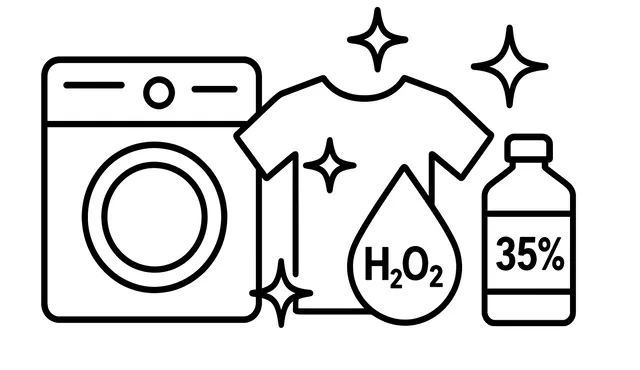
Hydrogen peroxide (H2O2) is an effective, oxygen-based bleaching and stain-removing agent. It breaks down into water and oxygen, which is why it is seen as more environmentally friendly than chlorine bleaches. Below you will find the most important tips: safety, dilutions, and methods of use in washing machines, for soaking, and for spot stain removal.
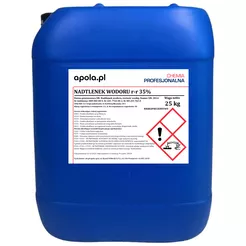
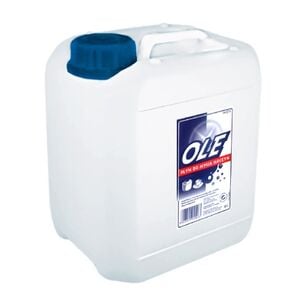
Hydrogen peroxide 35% is available at ole.pl – a concentrate for professional use that must be diluted before use.
Why H2O2 for whitening and stain removal?
- Effective on organic stains: coffee, tea, wine, blood, sweat, fruits.
- Chlorine-free: lower risk of yellowing, odors, and fiber damage.
- More environmentally friendly: breakdown products are water and oxygen (when used correctly).
- Good compatibility with detergents: an "oxygen booster" for powders and liquids.
Note: Wool, silk, and fabrics dyed with unstable dyes may react poorly to H₂O₂. Always perform a test on an inconspicuous area.
Safety (especially at 35%)
- PPE: goggles, nitrile gloves, apron; good ventilation.
- Pouring rule: always add H2O2 to water, never the other way around.
- Storage: airtight HDPE, upright, cool, away from sunlight and children.
- Do not mix with: chlorine, ammonia, vinegar, strong acids/bases, copper, and iron.
- Surfaces: avoid wood, leather, and certain metals; rinse spills with water.
- Label: label working solutions with concentration and date.
What concentrations work in practice?
For laundry work, 1.5–6% solutions are most commonly used, with 3% being the standard for stain removal and whitening of whites. In the wash bath (water in the drum), the final concentration is lower – and that is sufficient.
Quick dilutions from 35% (for 1 l of solution)
| Target concentration | How much 35% to add | How much water to add |
|---|---|---|
| 0.5% | 14.3 ml | 985.7 ml |
| 1.5% | 42.9 ml | 957.1 ml |
| 3% | 85.7 ml | 914.3 ml |
| 6% | 171.4 ml | 828.6 ml |
Note: prepare only as much as you will use in 1–2 weeks (H2O2 breaks down).
How to use
1) Washing machine – full laundry (whites/cotton)
- Dosage: add 100–200 ml of 3% solution to the detergent drawer (main wash section) along with powder/liquid.
- Temperature: best at 40–60°C. Lower temperatures work, but slower; above 60°C the decomposition rate increases (which can be beneficial for heavy soiling).
- Do not mix: with chlorine bleach. Regular detergent – Yes.
2) Soaking before washing
- Solution: 1.5–3% in warm water.
- Time: 30–60 min (for stubborn stains up to 2–3 h).
- After soaking, wash as usual.
3) Spot stain removal
- Solution: 3% (for delicate fabrics 1–1.5%).
- Application: soak the stain, wait 5–10 min, gently rub with fingers/soft-bristled brush.
- Rinse and wash normally. If necessary – repeat.
Example scenarios
- Blood: first cold water, then 1.5–3% H₂O₂ locally; do not use hot water on fresh stains (it sets the protein).
- Coffee/ tea/ wine: spray 3%, leave for 10–15 min, rinse; for whites, washing at 40–60°C will help.
- Yellowing of whites: washing with 150–200 ml of 3% usually restores freshness after a few cycles.
- Diapers, onesies, towels: soaking 1.5–3% + washing at 60°C has deodorizing and brightening effects.
- Curtains: short soaking 1.5–3% and gentle program – brightens and refreshes.
Temperature, pH, activators
- Temperature: 40–60 °C is the optimal range.
- pH: a slightly alkaline environment with detergent promotes fat removal, but at very high pH, H₂O₂ breaks down faster – so do not overdo it with soda/alkalis.
- Activators: some detergents contain activators (e.g., TAED), which make "oxygen" bleaching effective even at 30–40°C. H₂O₂ complements them well.
Common mistakes
-
Too high concentration on delicate fabrics → possible weakening of fibers or discoloration.
-
Mixing with chlorine or vinegar → risk of dangerous reactions and odors.
-
Application on color without testing → some dyes are unstable to oxidation.
-
Contact with metals (copper, iron) → accelerated, violent degradation of the solution.
Quick FAQ
Can I pour 35% directly into the washing machine?
No. 35% is a concentrate – always dilute to working concentrations.
Is H₂O₂ safe for septic systems?
In reasonable doses and after breakdown – yes; the products are water and oxygen.
Can it replace soda ash or sodium percarbonate?
These are different agents. H₂O₂ complements detergents and percarbonate well (the latter releases H₂O₂ in water). You can use it, but do not add excessive amounts of bases.
Is it suitable for colors?
Cautiously. On permanent colors – usually yes (after testing). On unstable dyes, it may lighten.
Summary and recommendation
H2O2 is a versatile, effective oxygen bleach for whites and many stains. The key is to handle the 35% concentrate safely, dilute correctly (1.5–3% for everyday use, up to 6% for tough stains), and choose the right temperature and time.
Need an economical solution for a professional laundry? At ole.pl you will find hydrogen peroxide 35% to prepare working solutions tailored to your needs.




 Polski
 Czech
Czech
 German
 Spanish
 Slovak